Driveway Resurfacing & Overlay in South Jersey
Extend the life of your driveway with a new asphalt overlay. A cost-effective alternative to full replacement when the base is still solid.
Call for Free EstimateWhat Is Driveway Resurfacing & Overlay?
Resurfacing applies a new layer of asphalt over your existing driveway surface. This process includes cleaning, crack filling, and preparing the old surface to bond properly with the new layer, giving you a fresh appearance and extended lifespan. Unlike full replacement, resurfacing preserves your existing base and asphalt structure, adding 1.5-2 inches of new material on top. This makes it significantly less expensive than replacement while still providing a fresh, uniform surface that can add 10-15 years to your driveway's life when the underlying structure is sound.
When Is It Recommended?
Driveways with surface wear, minor cracking, or cosmetic issues where the underlying base is still structurally sound. Typically suitable for driveways 10-20 years old. Resurfacing is the right choice when your driveway shows surface oxidation and gray color, has scattered linear cracks that haven't interconnected, displays minor raveling or surface texture loss, or simply looks worn but doesn't have structural problems. If your driveway drains properly, doesn't have areas that have settled or heaved, and the existing asphalt is still generally level and stable, resurfacing can restore it to like-new condition at a fraction of replacement cost.
Who Is It For?
Budget-conscious homeowners who want to restore their driveway's appearance and function without the cost of complete replacement. Resurfacing is ideal for homeowners with structurally sound driveways that have surface-only issues, property owners looking to improve curb appeal before selling, and anyone who wants to extend driveway life without the expense and disruption of full replacement. It's also a smart choice for landlords and property managers who need to maintain multiple driveways cost-effectively.
Why Choose Harrison Paving
Quality workmanship and honest service for over 40 years
40+ Years Experience
Four decades of proven results in South Jersey
Owner Involvement
Principal on every job, not just a sales rep
Licensed & Insured
NJ Home Improvement Contractor #13VH01294400
Written Estimates
Detailed proposals provided on the spot
Our Process
A straightforward approach focused on quality results
Surface Prep
Cleaning, crack filling, and repairs to ensure proper bonding.
Edge Work
Edges are prepared and transitions are addressed for a clean finish.
Overlay Application
New hot-mix asphalt layer is applied and compacted.
Finishing
Proper compaction and edge finishing complete the project.
Understanding Driveway Resurfacing & Overlay
Driveway resurfacing, also called an asphalt overlay, is one of the most cost-effective ways to restore an aging but structurally sound driveway. At Harrison Paving, we've performed hundreds of resurfacing projects throughout Gloucester, Camden, and Burlington Counties, giving homeowners a like-new driveway at 40-60% of the cost of full replacement.
The success of any overlay depends entirely on proper surface preparation. We begin by thoroughly cleaning the existing surface to remove dirt, debris, and vegetation. All cracks are filled with hot-applied crack sealant to prevent reflective cracking through the new surface. Areas with localized damage, potholes, edge failures, or severely deteriorated spots, are cut out and patched with fresh asphalt before the overlay proceeds. Oil spots are treated or cut out, as petroleum contamination prevents proper bonding.
Edge preparation is critical for a professional result. We mill or cut back existing asphalt where it meets garage floors, sidewalks, and other hard surfaces to ensure the new overlay doesn't create a lip or height difference that causes problems. Where the driveway meets lawn areas, we carefully establish clean edge lines and may adjust grades to maintain proper drainage patterns.
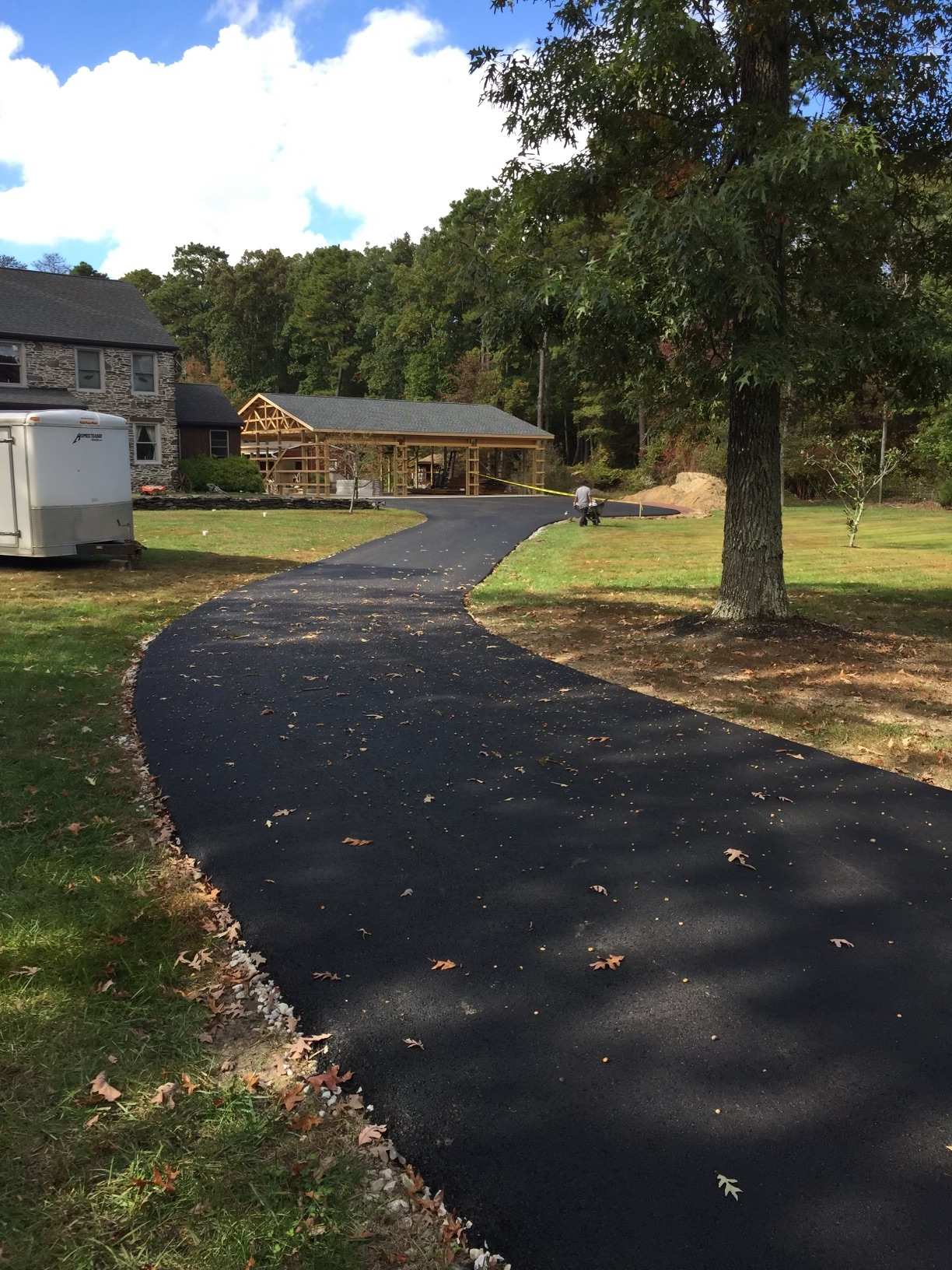
Once preparation is complete, we apply hot-mix asphalt in a layer typically 1.5-2 inches thick. The material is spread uniformly using a paving machine or by hand for smaller driveways, then compacted with appropriate rollers to achieve maximum density. The new surface bonds to the prepared old asphalt, creating an integrated structure rather than just a layer sitting on top. Properly installed, a resurfacing overlay can provide 10-15 years of additional service life.
Benefits of Driveway Resurfacing & Overlay
Why this service makes sense for your property
Cost Savings
Resurfacing typically costs 40-60% less than full replacement, making it an economical choice for sound driveways.
Less Disruption
Most resurfacing projects are completed in one day, with minimal excavation and cleanup.
Like-New Appearance
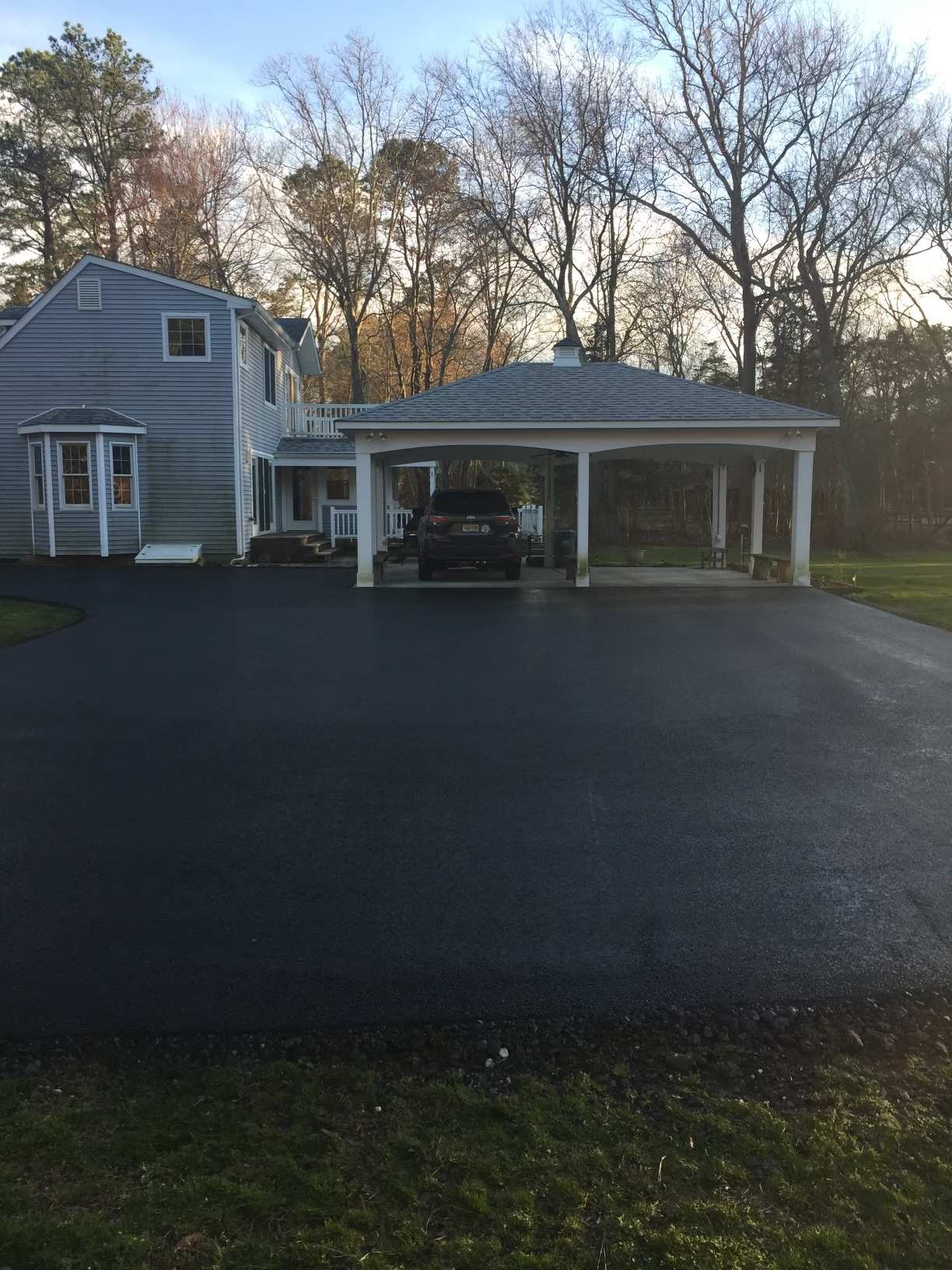
A fresh overlay provides the same rich, black appearance as a brand-new driveway.
Extended Lifespan
Add 10-15 years of service life to your existing driveway investment.
Improved Function
Resurfacing eliminates minor surface irregularities, improving drainage and smoothness.
Quick Return to Service
You can typically use your resurfaced driveway within 24 hours after completion.
Materials We Use
For resurfacing projects, we use a finer-graded hot-mix asphalt specifically designed for overlay applications. This mix has smaller aggregate sizes that allow for thinner application while maintaining durability. The asphalt cement binder is the same high-quality material used in our new installations, formulated for South Jersey's climate conditions. Before overlay application, we use hot-applied rubberized crack sealant for crack filling and fresh hot-mix asphalt for any patching repairs. Tack coat, a thin layer of asphalt emulsion, is applied to the prepared surface immediately before overlay to ensure proper bonding between old and new layers.
Maintenance Tips
Care for your resurfaced driveway as you would a new installation. Wait 30 days before sealcoating to allow the new asphalt to cure. Avoid parking in one spot repeatedly during the first warm season. Once cured, maintain a regular sealcoating schedule every 2-3 years to protect your investment. Address any new cracks promptly with crack sealant before they can propagate through the overlay. Keep the surface clean of debris and petroleum products. With proper maintenance, your resurfaced driveway will provide many years of reliable service before requiring attention again.
South Jersey Considerations
In South Jersey's coastal environment, resurfacing decisions require careful evaluation of existing conditions. The freeze-thaw cycles we experience, while milder than northern New Jersey, can still cause reflective cracking if underlying cracks aren't properly addressed. Sandy soils and high water tables in Gloucester, Camden, and Burlington Counties can affect base stability, which must be confirmed before proceeding with overlay rather than replacement. At Harrison Paving, we provide honest assessments of whether your driveway is a good candidate for resurfacing. We won't recommend overlay for a driveway that really needs replacement, that would be a waste of your money. Our goal is to provide the solution that makes the most sense for your specific situation and budget.
Where we do driveway resurfacing & overlay
Gloucester County, Franklinville, Glassboro, Mullica Hill, Washington Township, Williamstown, Pitman, Clayton, Woolwich Township, Salem County, Cumberland County, Camden County, Burlington County, the Shore.
Frequently Asked Questions
Common questions about driveway resurfacing & overlay
How do I know if my driveway can be resurfaced?
Your driveway is a good candidate for resurfacing if it drains properly, has no significant settling or heaving, and damage is limited to surface issues like oxidation, minor cracking, and wear. We assess the base condition by walking the driveway and looking for soft spots or movement. If the base is sound, resurfacing can be an excellent option.
How thick is a resurfacing overlay?
We typically apply 1.5-2 inches of new asphalt for residential resurfacing. This thickness provides adequate durability while managing the height increase at transitions to garage floors and walkways.
Will the seam between old and new asphalt be visible?
At edges where new asphalt meets other surfaces, there will be a visible transition. We take great care to make these transitions smooth and professional. On the driveway surface itself, the entire area receives overlay, so there's no seam.
How long does resurfacing last?
A properly installed overlay on a sound base can last 10-15 years with appropriate maintenance including sealcoating every 2-3 years and prompt crack filling.
Is resurfacing always cheaper than replacement?
Yes, resurfacing typically costs significantly less than replacement. However, if your driveway has base problems, resurfacing won't address them and you'll face the same issues again. In those cases, replacement is more cost-effective long-term.
Related Services
Explore other services that complement this work
Ready to Get Started?
Contact us today for a free, no-obligation estimate. We'll provide a written proposal on the spot.